
What does it take to scale AI responsibly in government? 4 lessons from our AI event
AI is no longer new to government. But the momentum has shifted from rushing to adopt it, to finding ways to scale it safely and responsibly.
When the AI Opportunities Action Plan urged the public sector to “rapidly pilot and scale AI products and services,” many departments did just that.
But turning those AI pilots into live services hasn’t exactly been easy.
Our recent lunch-and-learn event brought public sector colleagues together to explore why that’s the case and what it takes to scale AI in government.
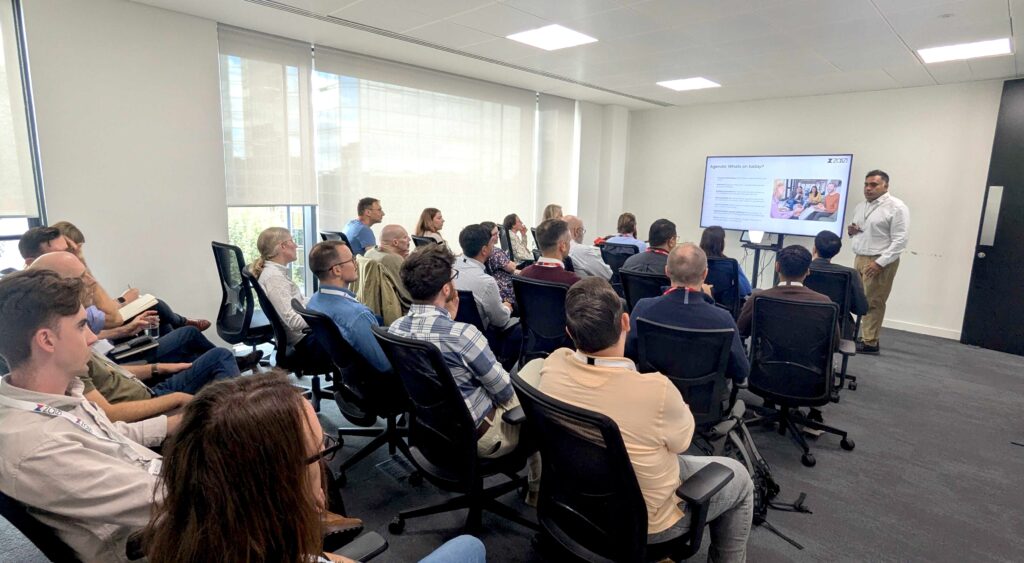
Here are 4 key takeaways from the event
Look at the whole service, not just the AI
Government services aren’t simple.
What works in the lab can struggle when it hits the real world and encounters complex policies, siloed and poor data, fragmented organisations, and legacy technology.
Scaling AI means moving beyond what AI model to use and thinking about the whole service — how it fits into existing systems, processes and organisations. It also means assessing whether you have the correct foundations to actually scale AI.
That thinking needs to happen at the beginning if teams want to move beyond pilots.
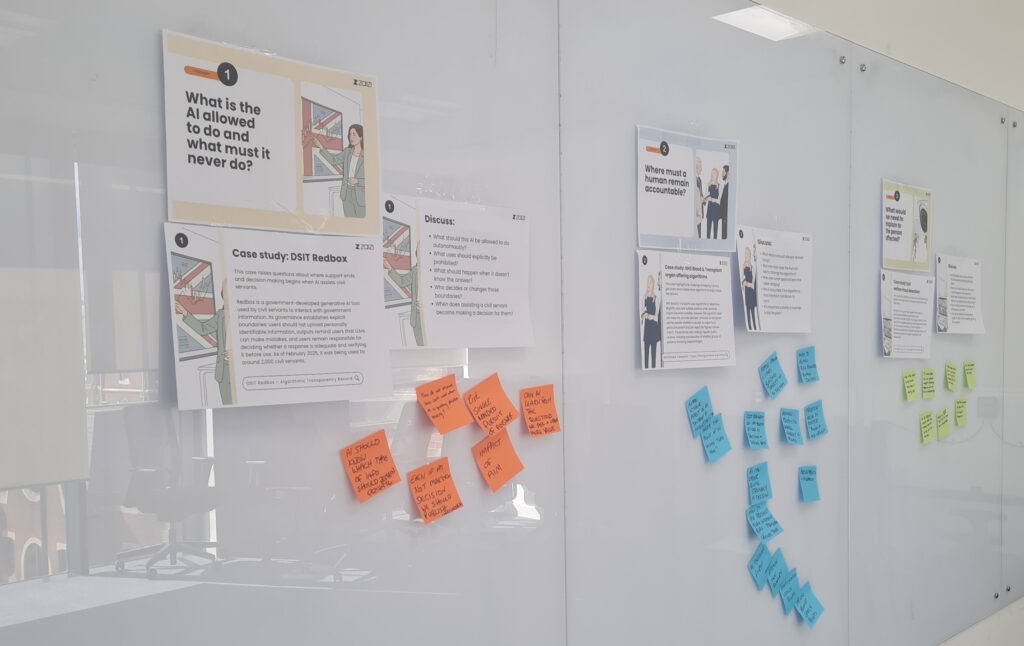
Scale AI in government: The human role
The default answer to AI risk is human intervention.
But a human can’t check AI output if it produces thousands of results or completes tasks on its own. You also remove some of AI’s benefits by adding that friction to the process.
This is where shifting some responsibility into the design makes sense.
The degree of intervention should depend on what the AI is doing and how serious the impact is. For example, when decisions affect rights, benefits, or legal status, a human would naturally verify and sign off on the final decision.
A ‘Human in the lead’ approach means setting parameters and deterministic guardrails within which the AI operates. Only when cases fall outside the rules does it trigger an alert for human intervention. That keeps friction minimal but humans still have control and oversight.
Another thing to consider is that AI can still influence humans, even when it doesn’t make the final decision, So designing systems that give users confidence to understand and challenge AI recommendations is important.
Keeping AI flexible and trustworthy
Modern AI models can handle messy, unstructured information — documents, forms, photographs, and freeform text. They’re creative, flexible but unpredictable and prone to errors.
Meanwhile, rules-based systems provide predictability and explainability but find it hard to handle information that doesn’t fit neatly within the predefined structures.
Approaches such as neurosymbolic AI combine the flexibility of traditional AI with the control of rules-based systems.
For government organisations, the appeal is building AI systems that can handle complexity while keeping checks and accountability.
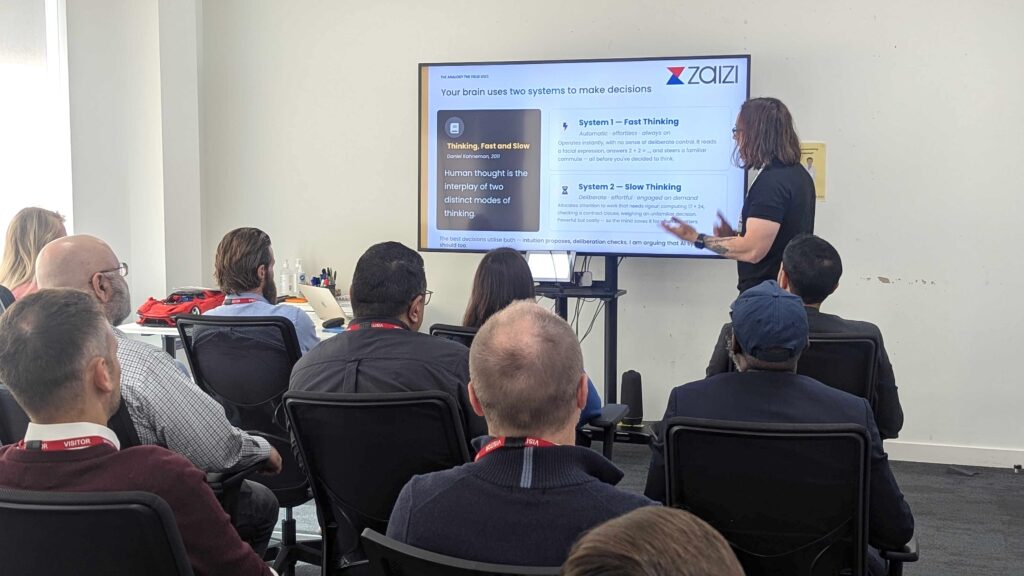
Governance needs to be designed into the service
In public delivery, it’s essential not to rush into solutions without thinking through the implementation and consequences. It’s precisely why government can be slow to adopt new tech.
And governance is probably the biggest blocker when it comes to AI because often it’s not thought about early enough.
Organisations should consider governance throughout the whole product lifecycle: design, development, deployment, and ongoing improvement. Responsibility depends as much on product, policy, and leadership teams as on technical teams.
Teams need to understand where to set AI’s boundaries, who remains accountable, what should be transparent, how to govern data, and how to preserve trust when moving to production.
Delivery not experimentation
The public sector has learned a lot by experimenting with AI. The next focus is delivery and scaling those into trusted services.
At Zaizi, we deliver complex, meaningful technical projects and help government organisations navigate some of the most complex AI assurance issues.
If you’d like to learn more about our case studies, please get in touch with us using the contact form below.
And we’ll be continuing our discussions at our next AI event, “Sovereign AI in government: Building secure, localised AI for public sector.” Find out more and register on LinkedIn.
Related content
-
How can government trust AI? Scaling public sector pilots into live services
-

From university to delivery: What our summer interns learned by solving a real public sector problem
-

What’s ‘human in the loop’ and why does it matter for government AI?
-
When machines go rogue: What the summer of AI agent chaos teaches us about engineering trust
-

The scaling problem: How government can finally operationalise AI
-

The Modern Government Podcast